
 Image 1 of 4
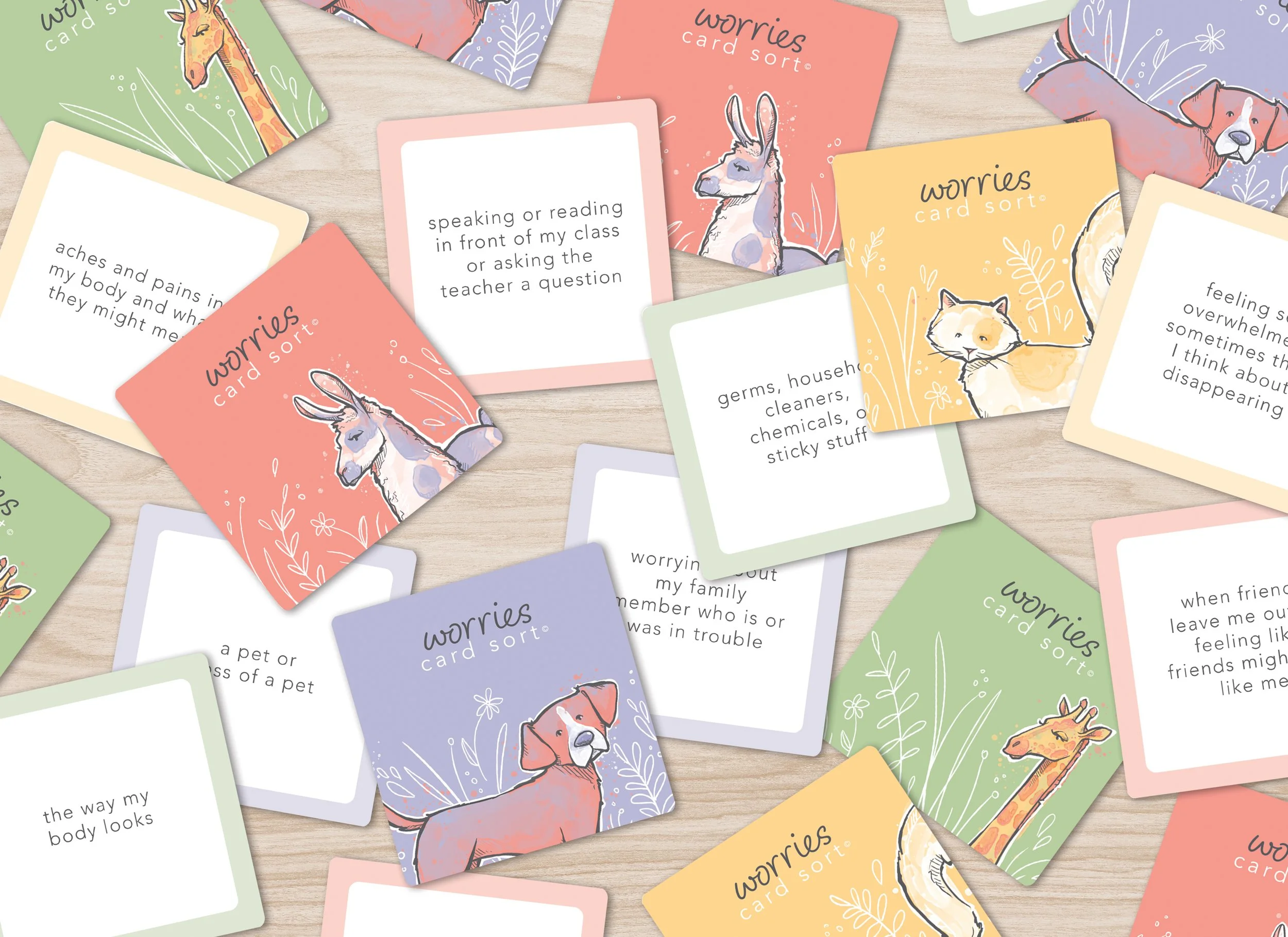 Image 2 of 4
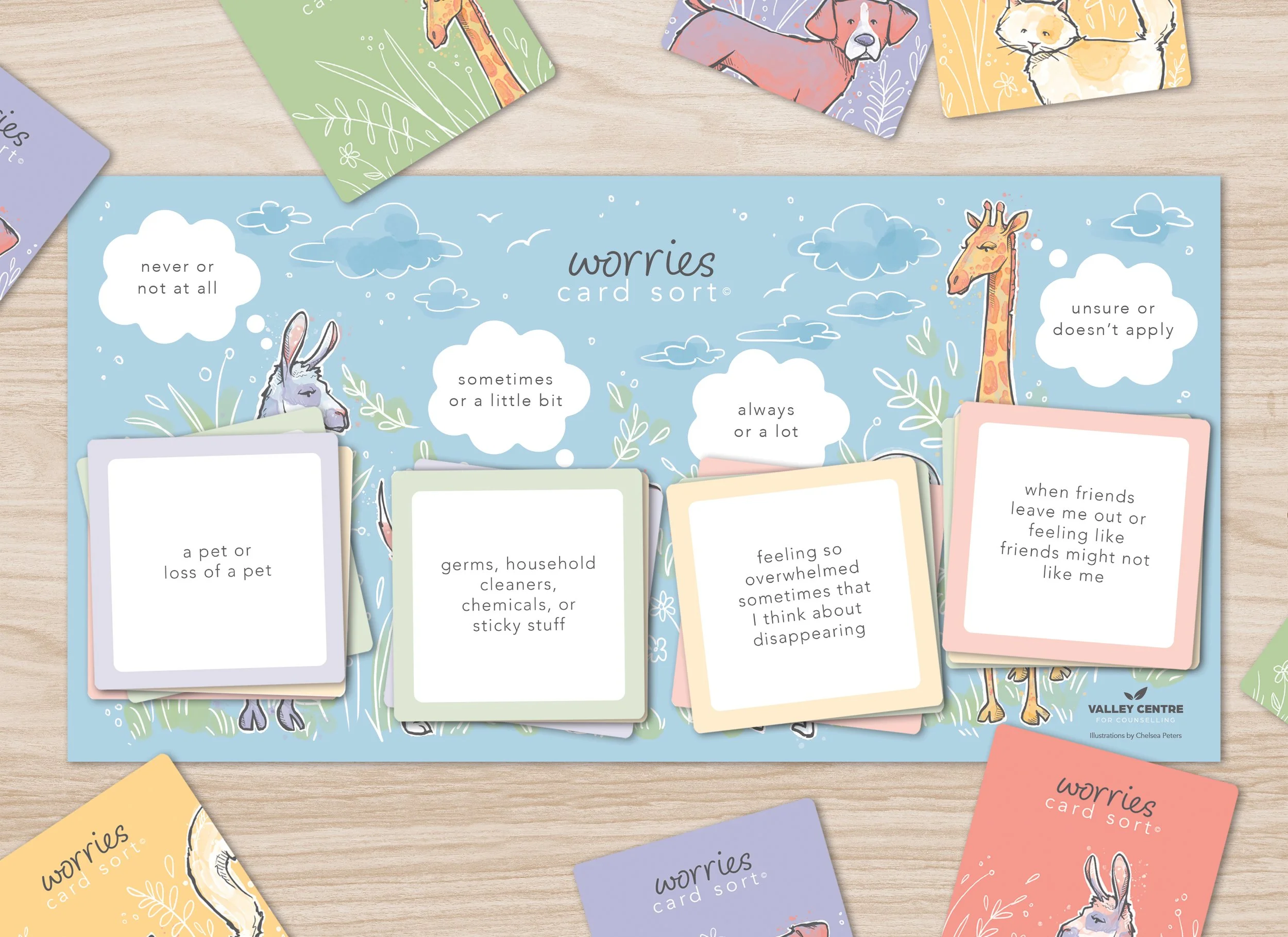 Image 3 of 4
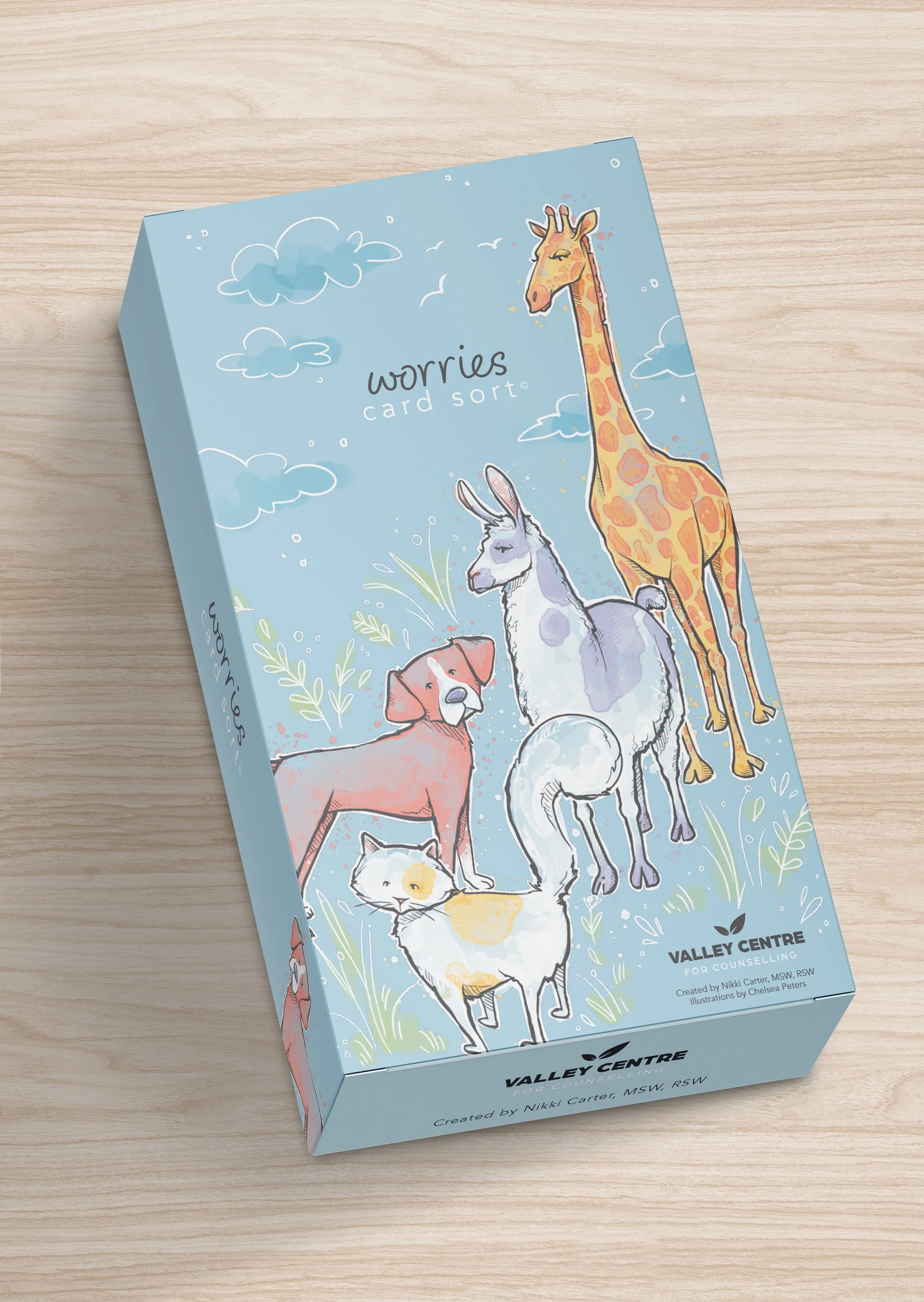 Image 4 of 4
Worries Card Sort®
Sometimes the hardest part of talking about worries is knowing where to begin.
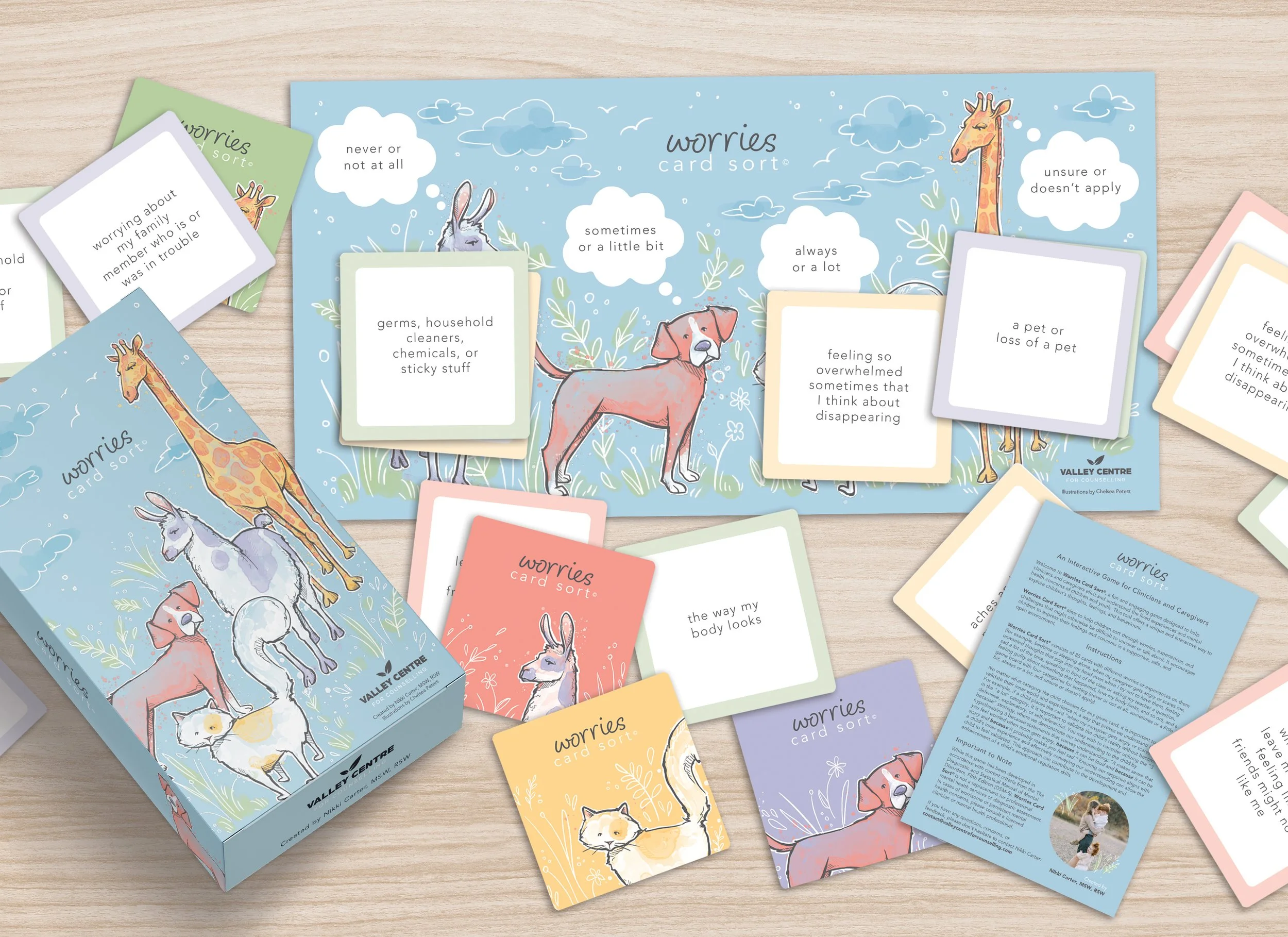
The Worries Card Sort® is an evidence-informed, interactive tool designed to help children and teens identify, explore, and talk about their experiences and the things that make them feel worried or afraid. Using illustrated cards featuring a wide range of common worries, fears, and experiences, children and teens can sort and share their worries in a way that feels approachable and engaging.
Developed with reference to the themes outlined in the Diagnostic and Statistical Manual of Mental Disorders (DSM-5), the Worries Card Sort® is not a diagnostic tool. Instead, it can help parents, caregivers, and clinicians notice patterns and themes in worries, uncover fears that may be difficult to put into words, and identify areas that may be helpful to explore further.
Created by Nikki Carter, MSW, RSW, the Worries Card Sort® gives children, adolescents, and the grown-ups supporting them a shared language for talking about worries — and a starting point for helping them take small, supported steps toward the things that scare them.
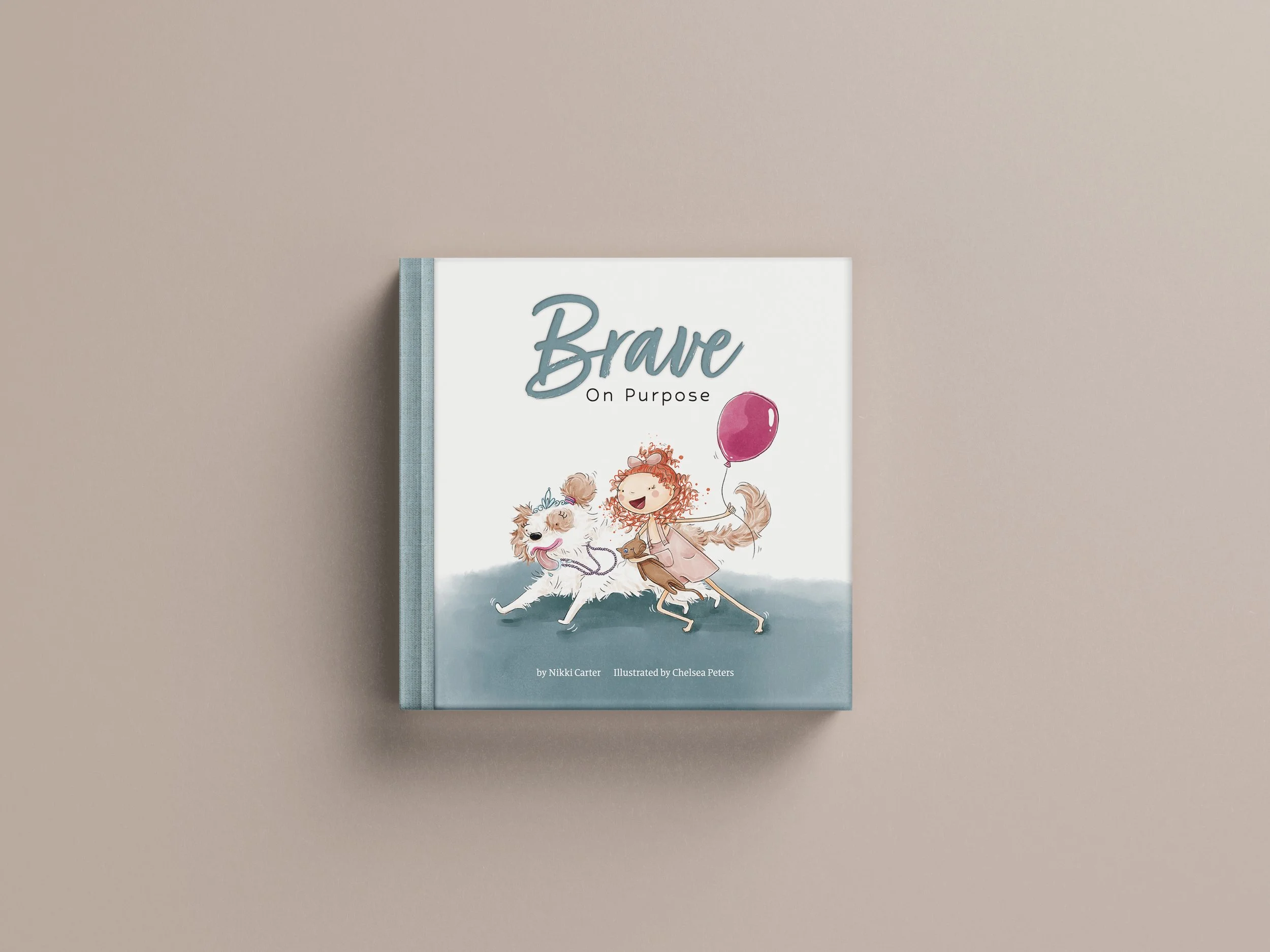
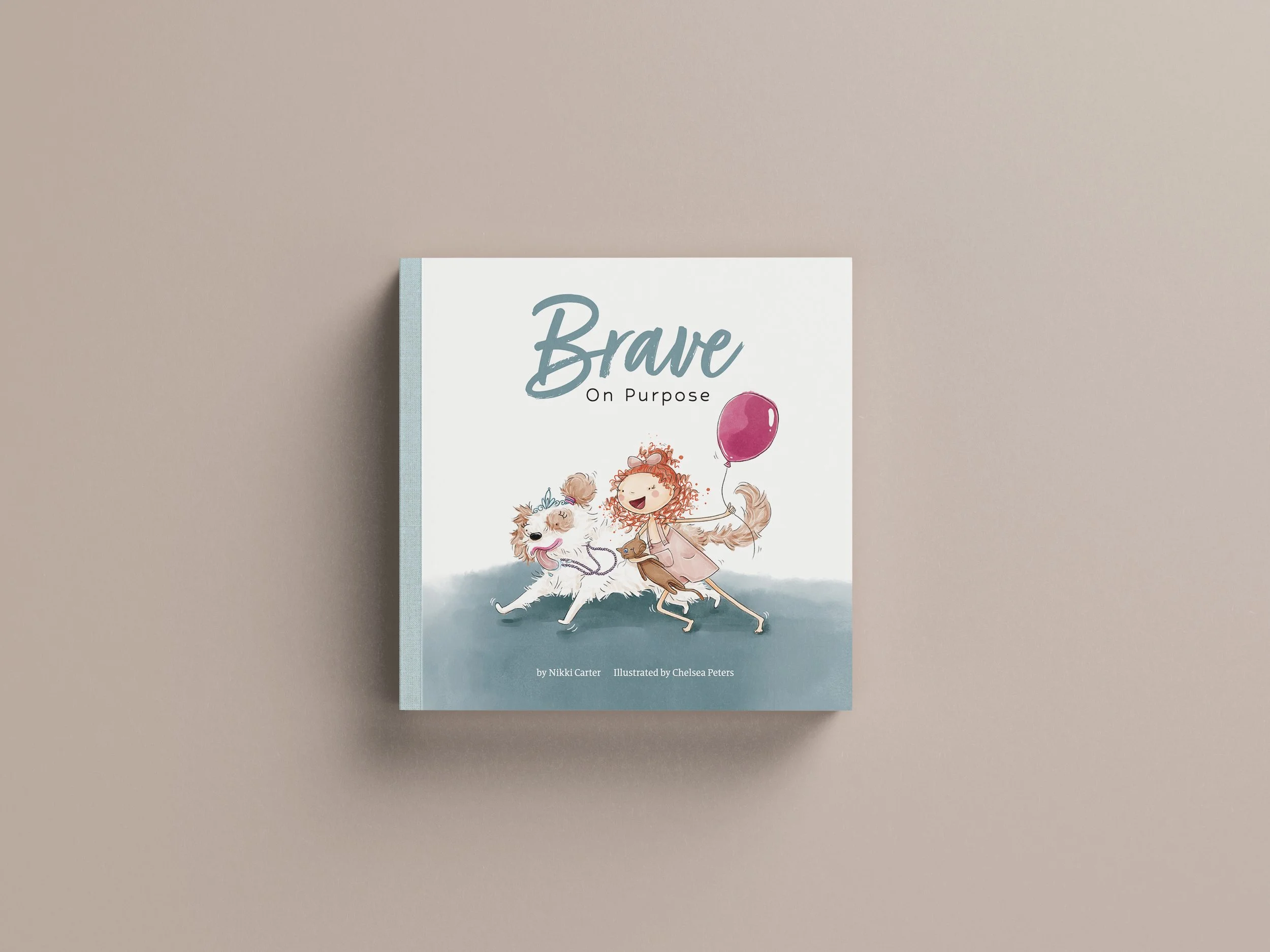
Designed for use by families, therapists, educators, and other helping professionals, the Worries Card Sort® can be used on its own or alongside Brave On Purpose to continue the conversation about worry, courage, and being brave on purpose.
Instructions
Worries Card Sort® includes 85 cards featuring a wide range of worries, feelings, and experiences children or teens may have — from common childhood fears to thoughts and experiences that can sometimes be difficult to put into words.
Examples include:
bedtime or sleeping alone
speaking in front of the class or asking a teacher a question
how my body looks
feeling guilty about something that happened
unwanted thoughts that pop into my head even when I try not to have them
feeling sad a lot of the time
when my caregiver gets angry or scares me
Children sort each card onto the accompanying game board using four categories:
Never or Not at All · Sometimes or a Little Bit · Always or a Lot · Unsure or Doesn't Apply
There are no right or wrong answers. Regardless of where a child places a card, the goal is to remain curious about their experience and respond in a way that communicates: I hear you. I understand. What you feel makes sense.
Responding to What You Learn
Some cards may open the door to important conversations. When they do, try to validate the child's experience before explaining, reassuring, problem-solving, or offering your own perspective.
For example, if a child places “when my caregiver gets angry or scares me” in the Always or a Lot category, a caregiver might understandably feel an urge to explain or defend what happened. Instead, begin by trying to understand the experience from the child's point of view.
One way to do this is with the “3 Because” strategy: offer three simple because statements that demonstrate your understanding of why the child might feel the way they do.
“It makes sense that you feel worried when mom gets angry, because it can be loud, because it can feel scary, and because it might make you feel sad.”
When our responses align with a child's inner experience, we help them feel heard, understood, and validated. Over time, these kinds of conversations can also support the development of emotional awareness and regulation skills.
Important to Note
Worries Card Sort® was developed with reference to current criteria and themes described in the Diagnostic and Statistical Manual of Mental Disorders, Fifth Edition (DSM-5). It is not a diagnostic tool and is not intended to replace professional mental health assessment, diagnosis, or treatment.
Rather, the card sort can help uncover patterns and themes in a child's worries, feelings, and experiences — including things they may have difficulty identifying or expressing on their own. These themes can provide a helpful starting point for further conversation and exploration.
If a child is experiencing persistent, significant, or concerning mental health symptoms, please consult a qualified mental health professional.
Questions, concerns, or feedback are always welcome. Please contact Nikki Carter at contact@valleycentreforcounselling.com.
Worries Card Sort®
Sometimes the hardest part of talking about worries is knowing where to begin.
The Worries Card Sort® is an evidence-informed, interactive tool designed to help children and teens identify, explore, and talk about their experiences and the things that make them feel worried or afraid. Using illustrated cards featuring a wide range of common worries, fears, and experiences, children and teens can sort and share their worries in a way that feels approachable and engaging.
Developed with reference to the themes outlined in the Diagnostic and Statistical Manual of Mental Disorders (DSM-5), the Worries Card Sort® is not a diagnostic tool. Instead, it can help parents, caregivers, and clinicians notice patterns and themes in worries, uncover fears that may be difficult to put into words, and identify areas that may be helpful to explore further.
Created by Nikki Carter, MSW, RSW, the Worries Card Sort® gives children, adolescents, and the grown-ups supporting them a shared language for talking about worries — and a starting point for helping them take small, supported steps toward the things that scare them.
Designed for use by families, therapists, educators, and other helping professionals, the Worries Card Sort® can be used on its own or alongside Brave On Purpose to continue the conversation about worry, courage, and being brave on purpose.
Instructions
Worries Card Sort® includes 85 cards featuring a wide range of worries, feelings, and experiences children or teens may have — from common childhood fears to thoughts and experiences that can sometimes be difficult to put into words.
Examples include:
bedtime or sleeping alone
speaking in front of the class or asking a teacher a question
how my body looks
feeling guilty about something that happened
unwanted thoughts that pop into my head even when I try not to have them
feeling sad a lot of the time
when my caregiver gets angry or scares me
Children sort each card onto the accompanying game board using four categories:
Never or Not at All · Sometimes or a Little Bit · Always or a Lot · Unsure or Doesn't Apply
There are no right or wrong answers. Regardless of where a child places a card, the goal is to remain curious about their experience and respond in a way that communicates: I hear you. I understand. What you feel makes sense.
Responding to What You Learn
Some cards may open the door to important conversations. When they do, try to validate the child's experience before explaining, reassuring, problem-solving, or offering your own perspective.
For example, if a child places “when my caregiver gets angry or scares me” in the Always or a Lot category, a caregiver might understandably feel an urge to explain or defend what happened. Instead, begin by trying to understand the experience from the child's point of view.
One way to do this is with the “3 Because” strategy: offer three simple because statements that demonstrate your understanding of why the child might feel the way they do.
“It makes sense that you feel worried when mom gets angry, because it can be loud, because it can feel scary, and because it might make you feel sad.”
When our responses align with a child's inner experience, we help them feel heard, understood, and validated. Over time, these kinds of conversations can also support the development of emotional awareness and regulation skills.
Important to Note
Worries Card Sort® was developed with reference to current criteria and themes described in the Diagnostic and Statistical Manual of Mental Disorders, Fifth Edition (DSM-5). It is not a diagnostic tool and is not intended to replace professional mental health assessment, diagnosis, or treatment.
Rather, the card sort can help uncover patterns and themes in a child's worries, feelings, and experiences — including things they may have difficulty identifying or expressing on their own. These themes can provide a helpful starting point for further conversation and exploration.
If a child is experiencing persistent, significant, or concerning mental health symptoms, please consult a qualified mental health professional.
Questions, concerns, or feedback are always welcome. Please contact Nikki Carter at contact@valleycentreforcounselling.com.